Well it is an idea promoted by the BBKA who want to "spotlight the golden goodness of local British honey and the dedicated beekeepers who produce it".
What better way to "spotlight the golden goodness" than by buying local honey and to that end they have produced a link whereby you can find local honey in your area of the UK.
But here comes the surprise - there is no honey for sale in the Dorchester and Weymouth area. In fact there is no honey for sale in the whole of Dorset. Now I know this is not so. There is Dorset Honey for sale it is just a question of finding it.
Now if any of you reading this have honey for sale then why not let me know and I can put the details on this website.
In the meantime I have done my own reading into honey - you would think after keeping bees for over 10 years I would know it all but that is never the case. The results of my reading can be seen in the revamped BeeInfo pages and in particular these pages.
That was a sentence I hoped I would not have to write but in the last 10 days we have had two confirmed sightings - one in Little Bredy and one just North of Weymouth.
Littlebredy nest
The Littlebredy sighting was initially reported by a beekeeper who saw "hawking" going on outside the hive. For those who are not aware of this behaviour it is when the hornet hovers outside the hive and catches incoming bees. It chooses incoming as they are less agile since they are carrying pollen or nectar. Once caught the hornet takes it to a nearby bush where it decapitates it and removes the abdomen. It is only interested in the thorax which contains the muscles and therefore the protein which it wants. An excellent short video from Italy is here. Though this is from Italy it is exactly the behaviour I have observed in Dorset.
Using the Asian Hornet Watch App DEFRA were notified. In addition the AHAT coordinator for West Dorset was notified and he notified me. That was Saturday.
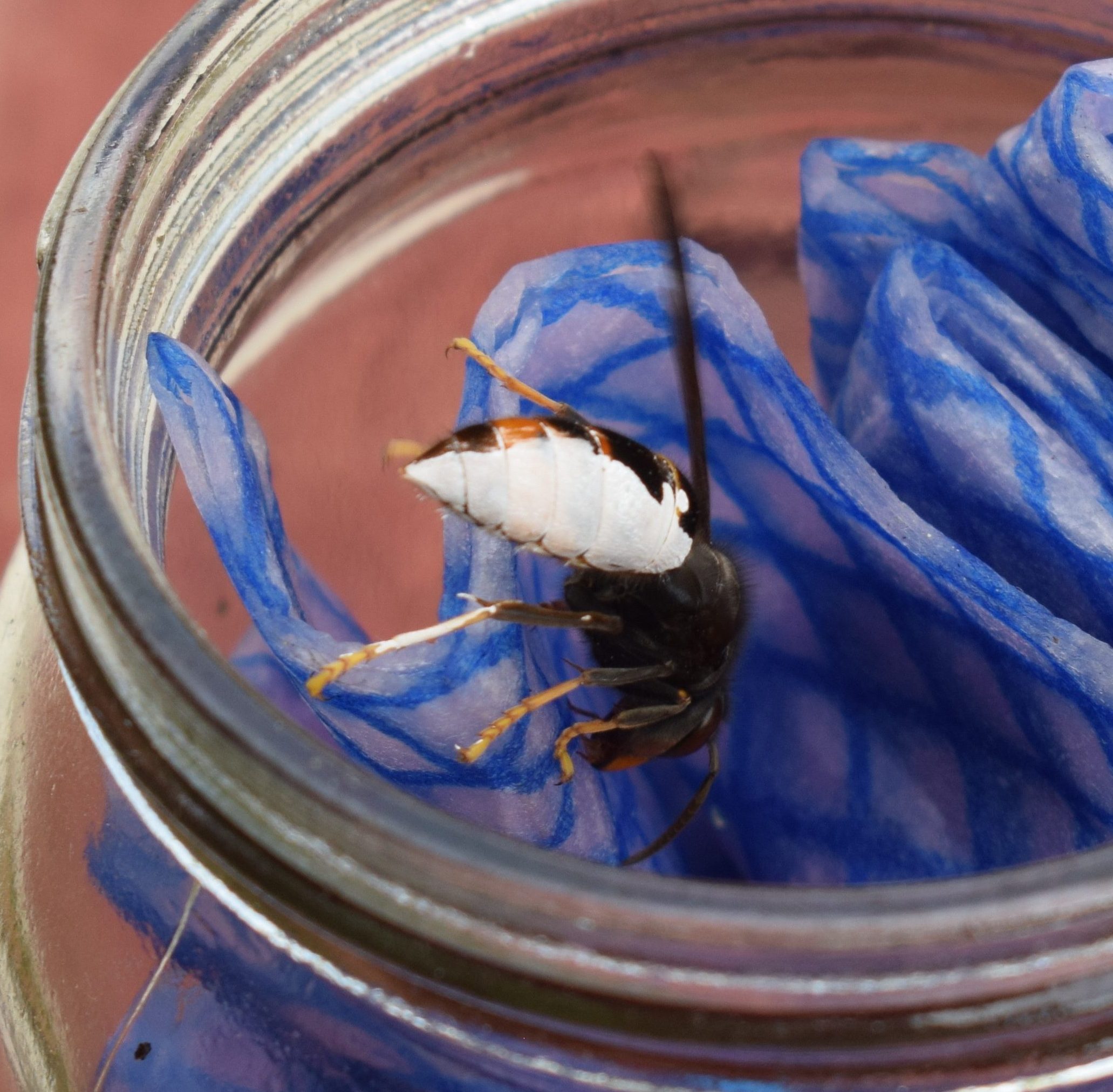
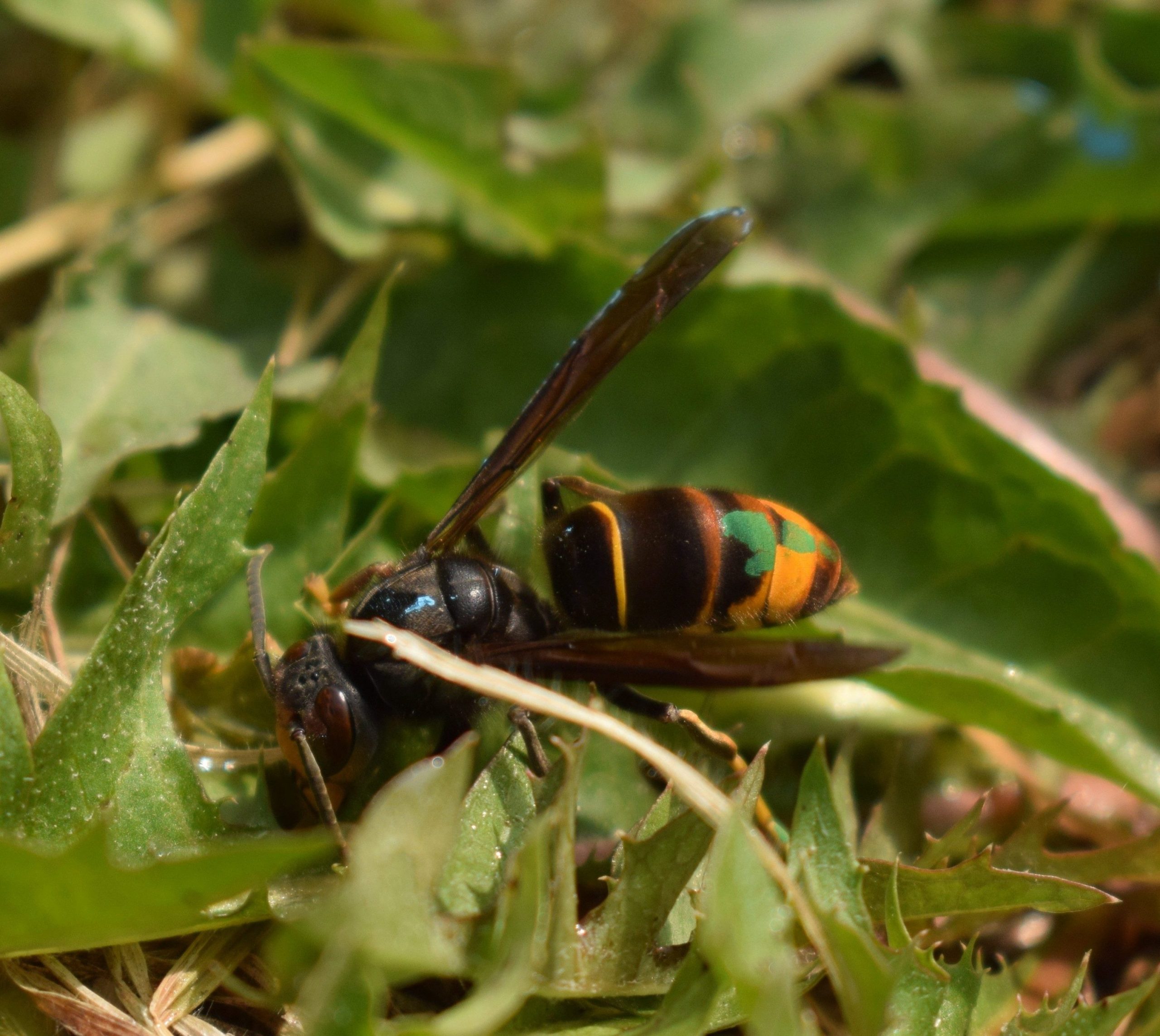
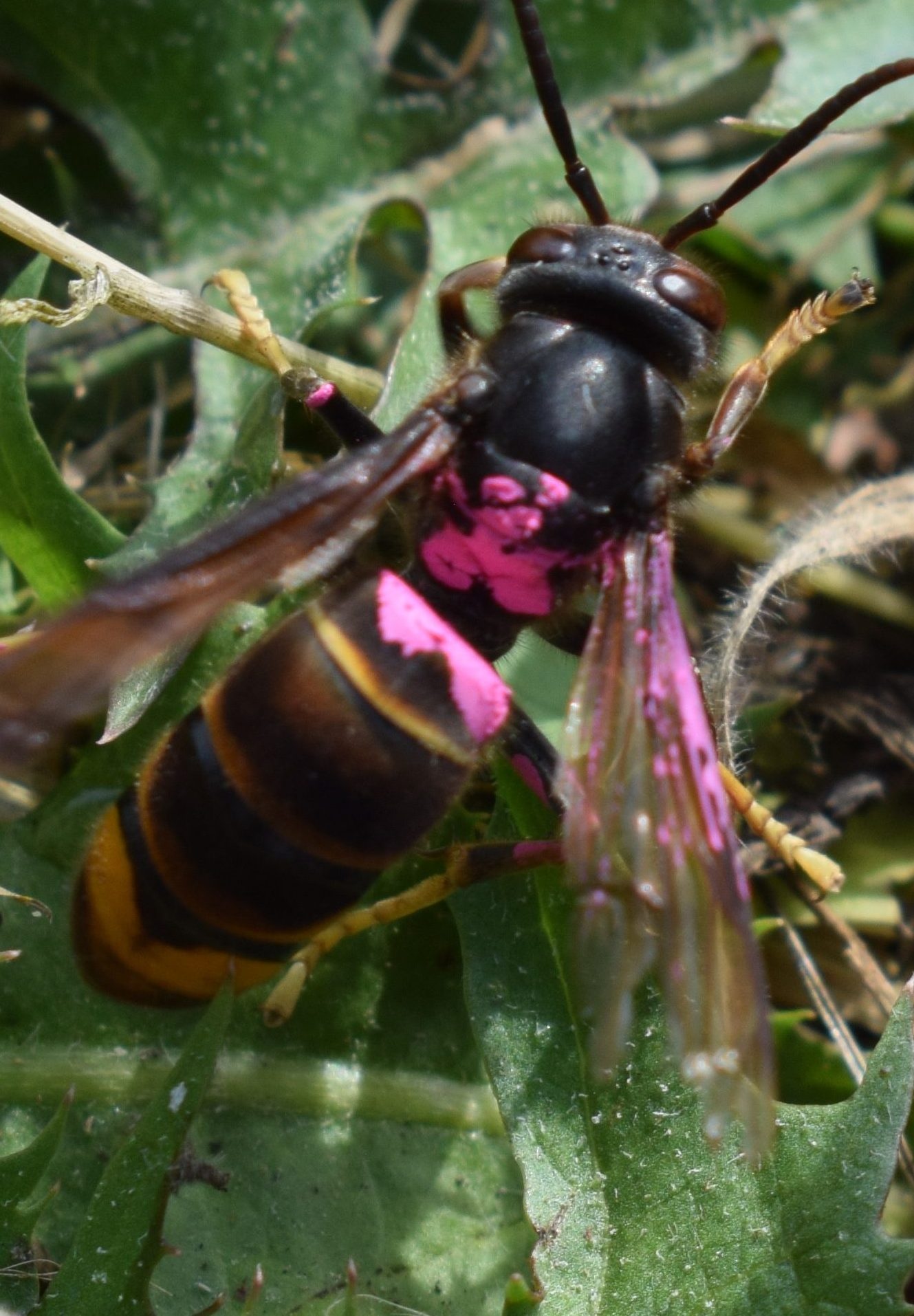
On Sunday we visited the site and using bait stations were able to mark several hornets and watch them fly back to the nest. We were timing the return trips at between two and three minutes. The nest was not too far away. When the hornet is feeding it is oblivious to anything else and it is possible to mark it, as we do queens. I should stress here that to trap them and then release them is illegal but track and trace can be performed without trapping them.
White oneGreen onePink one
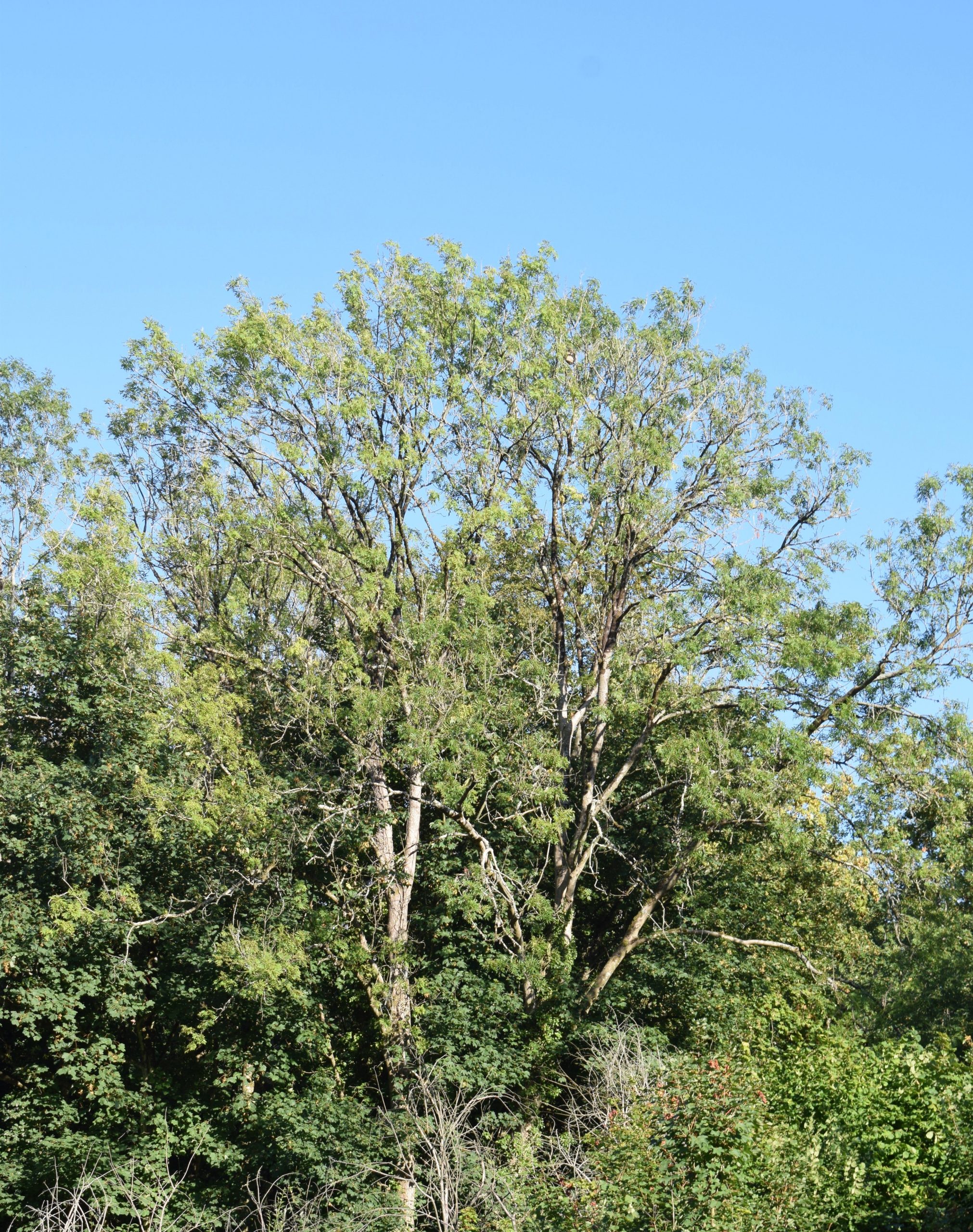
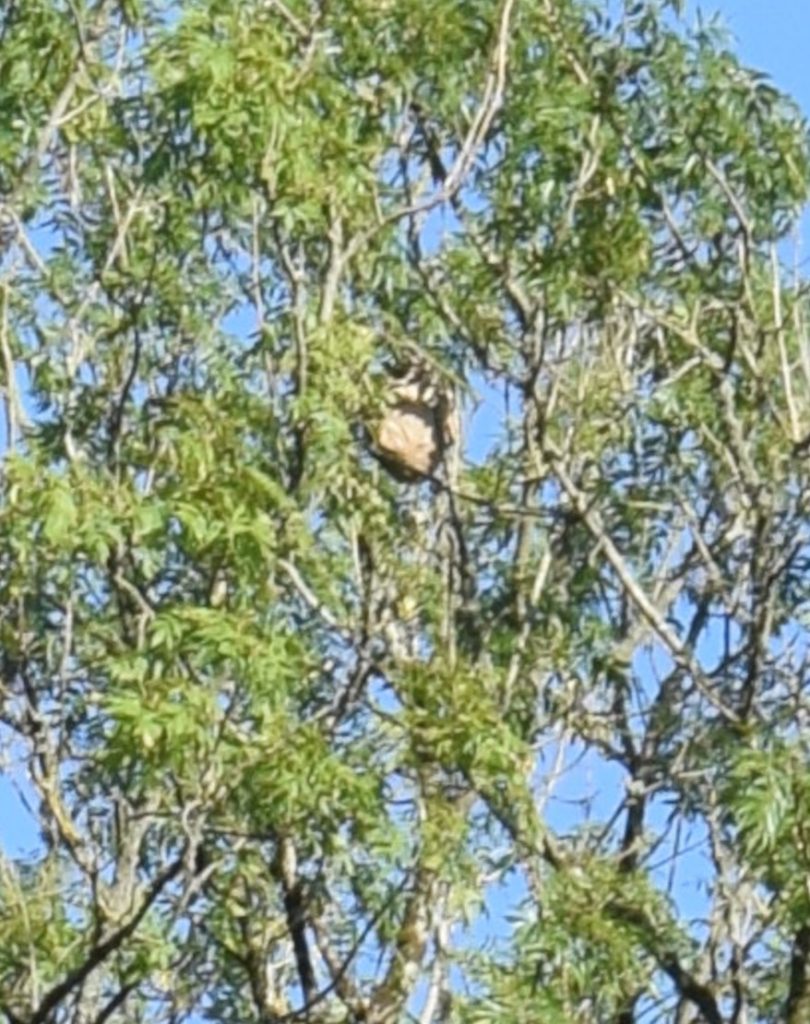
On Monday I returned to the location and carried out "track and trace". It took about 5 hours but I eventually located the nest. There was no risk of me getting too close as it was some 25 metres up an inaccessible tree.
Can you see the nest?This is the same photo but zoom in.
On Tuesday DEFRA were on site and agreed that the nest was the YLH nest and they summoned the "kill team". They subsequently attended and the nest was destroyed.
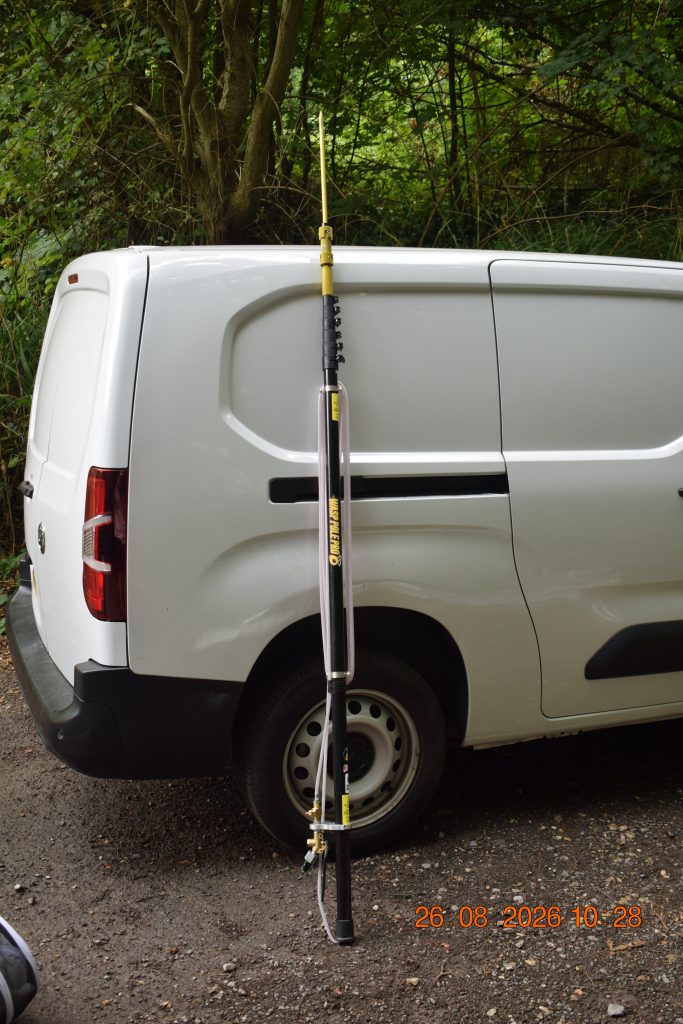
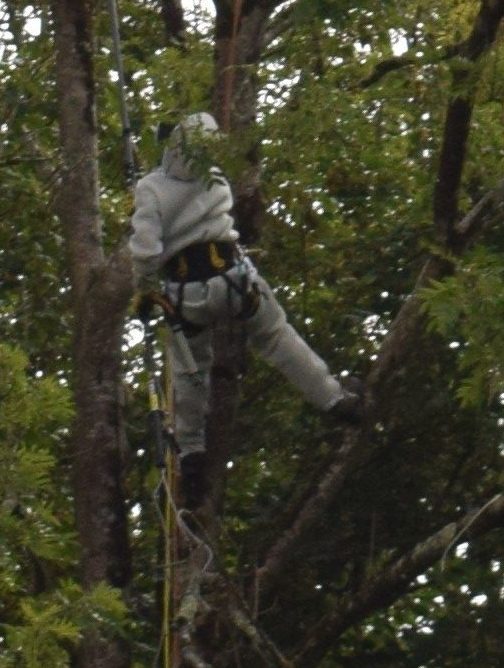
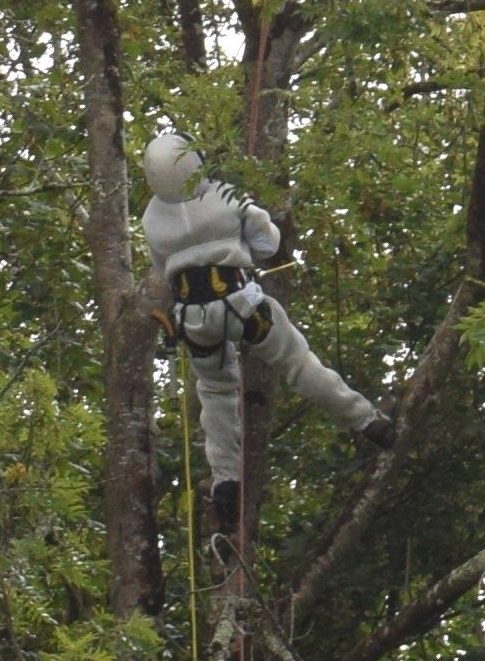
The Lance -12 metres extended.Climbing in PPE!Using the lance.
Throughout this whole process the local AHAT coordinators were in constant contact with DEFRA staff through a WhatsApp group. This helped in locating and destroying the nest and was an excellent example of team work. It was a combination of our local knowledge and their experience from working on nests in Kent that allowed us to get this secondary nest destroyed.
Thanks to the cooperation between DEFRA and the local team we were able to run several "track and trace" training sessions between the time the nest was first discovered and when it was destroyed. Participants were shown how to set up a bait station and then the various tips and tricks to locate the nest. I am sure all those who attended are now much better equipped to find any nests in their area.
BUT
There are suggestions that the queen actually divides her time between her primary and secondary nests. If that is the case then she may have been in the primary nest when the secondary nest was destroyed. If that is the case we still have a problem.
The queen is vital for the colony, as with bees, and therefore she is the first to leave the nest when danger is present. Thus she may have left the nest as soon as the "kill team" started on the tree. If that is the case we still have a problem.
We are assuming that this queen was from the Swyre nest destroyed late in 2025. It would be foolish to think this was the only queen to have survived the winter - there are probably others. If that is the case we still have a problem.
Further Action
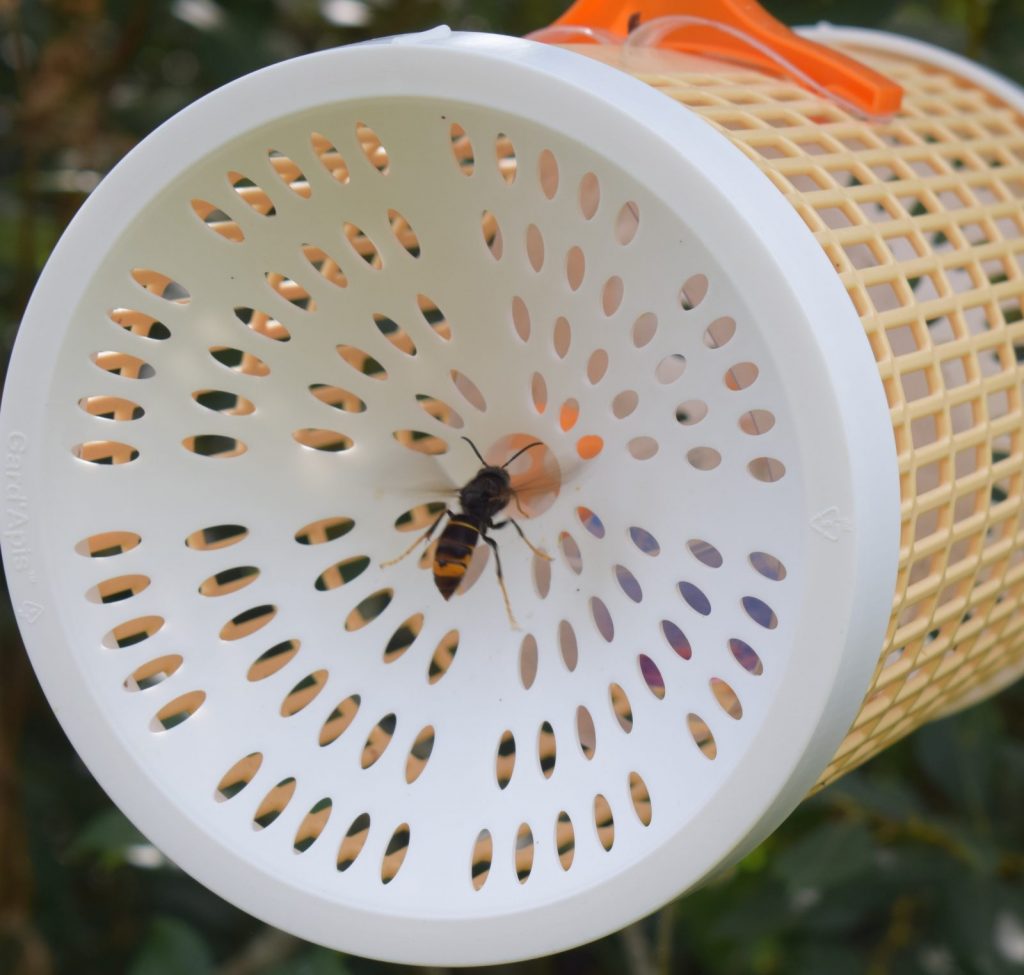
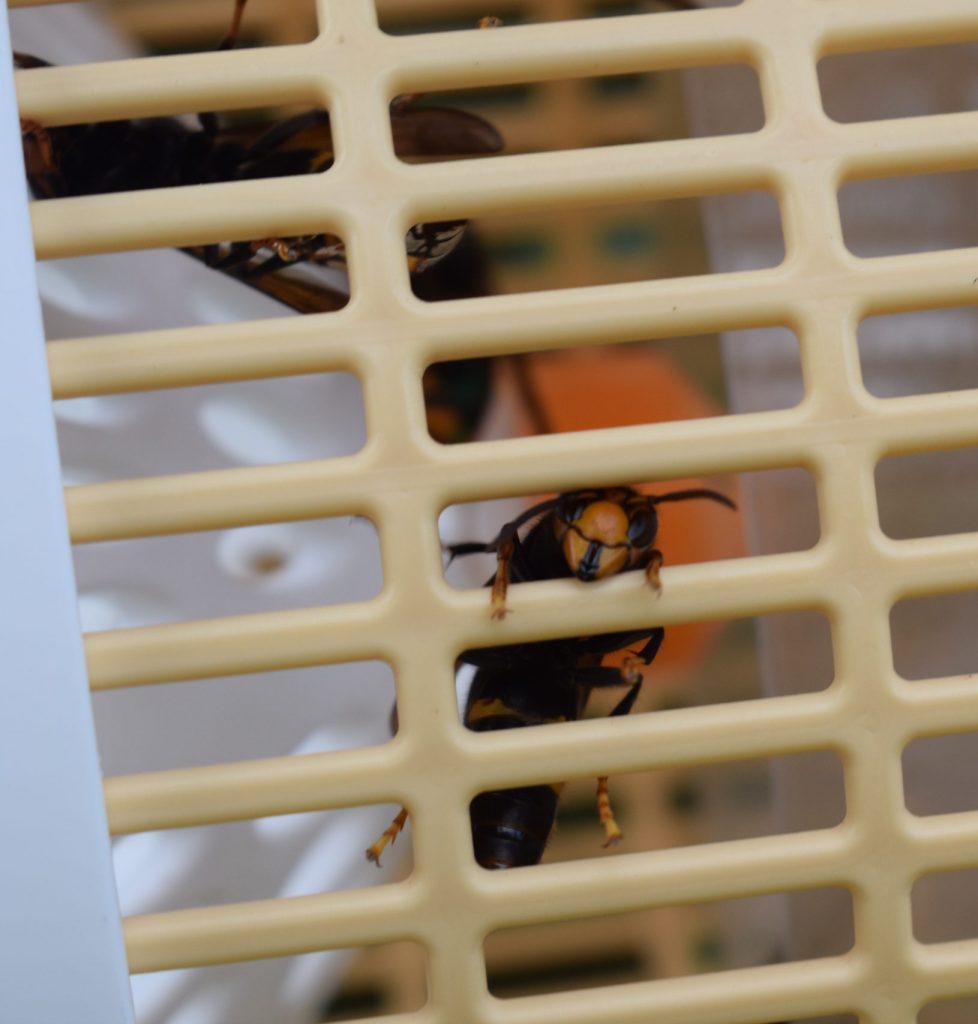
The nest has been destroyed but that is not the end of the story. DEFRA have installed two kill traps. These will be checked a few days after nest destruction. We would expect to find a few stragglers in there that were not killed in the nest. The traps will be reset and checked again a few days later. Hopefully there will be nothing in there. However if more workers are found then we will resort to setting up bait stations and see if there are any more YLH flying. If there are then it is back to the start again - report it on the App, track the nest, get it destroyed, check for any more flying.
The nest to the North of Weymouth is probably the result of a queen from the Ringstead nest destroyed last November. This was spotted by a beekeeper who saw it hawking near his hives. He reported it using the App and also notified me. Since then I have attended the site and confirmed the sighting. I have also reported it using the App as I was able to obtain better photos. In addition I have used contacts developed with DEFRA during the Littlebredy occurrence to notify them directly. Team work and good communication are vital in getting on top of this problem.
What can you do?
Be vigilant when attending your hives. If you suspect something then get a photo and report it using the App. Notify your local AHAT coordinator as soon as possible. Remember we would rather be called out multiple times to false alarms rather than miss one YLH nest.
There are updates to the Honey Show Schedule. Make certain that you have downloaded the latest. It is here.
So what are your bees doing? Some seem to be doing really well with lots of activity and loads of honey. Others seem to be OK but lacking in enthusiasm. Mine seem to be the lazy ones.
I have checked for diseases and there is nothing to worry about. I have checked for Varroa and that is not the problem. I blame it on the weather. I certainly don't want to rush around in this heat and I would rather stay indoors doing odd jobs inside and I guess that is how my bees feel. Stay inside, build a few cells, feed some larvae, bit of hive work - just chill.
Anyway nothing I can do except make certain there are stores and that they have access to water.