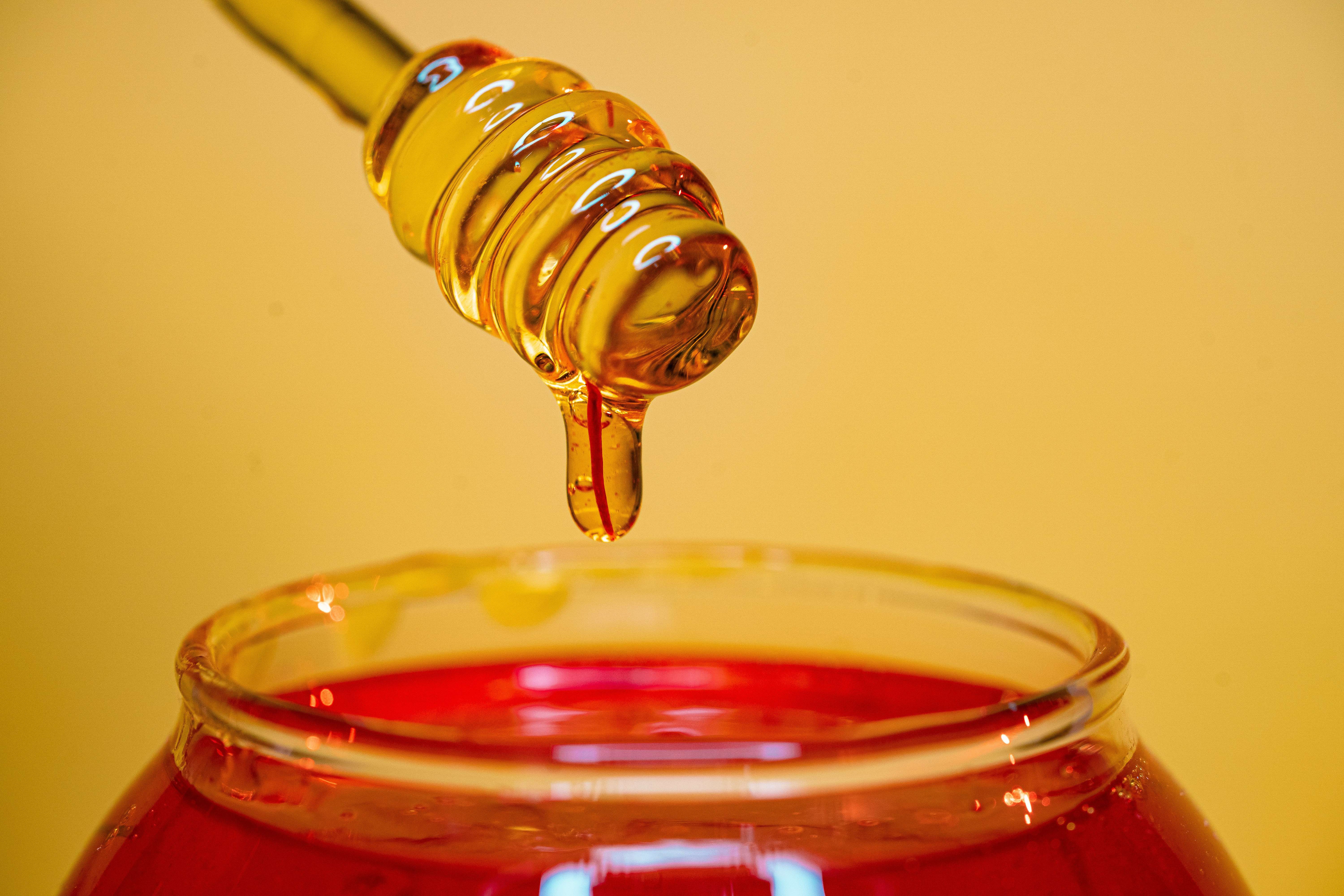
Why do bees make honey?
- They do not make it for human consumption!
- We take advantage of their excess production.
- Modern extraction methods do not kill the bees.
- Winter food source (the larder)
- Bees are eusocial insects.
- Unlike most insects they live as a colony over winter.
- They do not hibernate - they become dormant.
- A colony will contain about 10,000 bees over the winter
- A colony will eat between 10kg and 20 kg of stores in winter.
- Over the winter there are few flowers producing nectar.
- It is a concentrated energy source
A tablespoon, 14ml, of honey contains 180 kilojoules or 43 kilocalories.
- Nectar is approximately 80% water.
- If it was stored like this it would ferment.
- The bees remove the water till it is less than 20% water.
- As honey it can be stored for a long time.
- Bees add glucose oxidase to nectar in their honey stomach
- Glucose oxidase splits glucose into:
- Gluconic Acid which lowers the ph of the honey (make it more acid))
- Hydrogen peroxide which has anti-bacterial properties
- The bees feed the larvae on honey
- Larvae need to be fed until their cells are capped.
- In bad weather the bees cannot go out and forage
- It is at those times bees have to use their stores.
.